Summer is in full swing at Houghton Lodge Gardens and our small team of gardeners are working hard to keep everything happy and healthy.
A Strange Sort of Spring
It has been a strange month. Temperatures sat well below average, with frosts persisting deep into May, which our vegetable patch felt the most so it is a little behind. It was simply too cold to plant out seedlings, and some of our seeds need a steady 21°C to germinate. Everything slowed down and waited.
Then, on the flip of a coin, during May, we had the hottest temperatures of the year so far. Any seedlings growing in the glass pits had to be moved to the floor to prevent scorching. It is the kind of season that keeps you on your toes. I am hopeful that at least some of the seeds have now germinated and I can finally start planting out.

Wisteria Season: The Star of the Courtyard
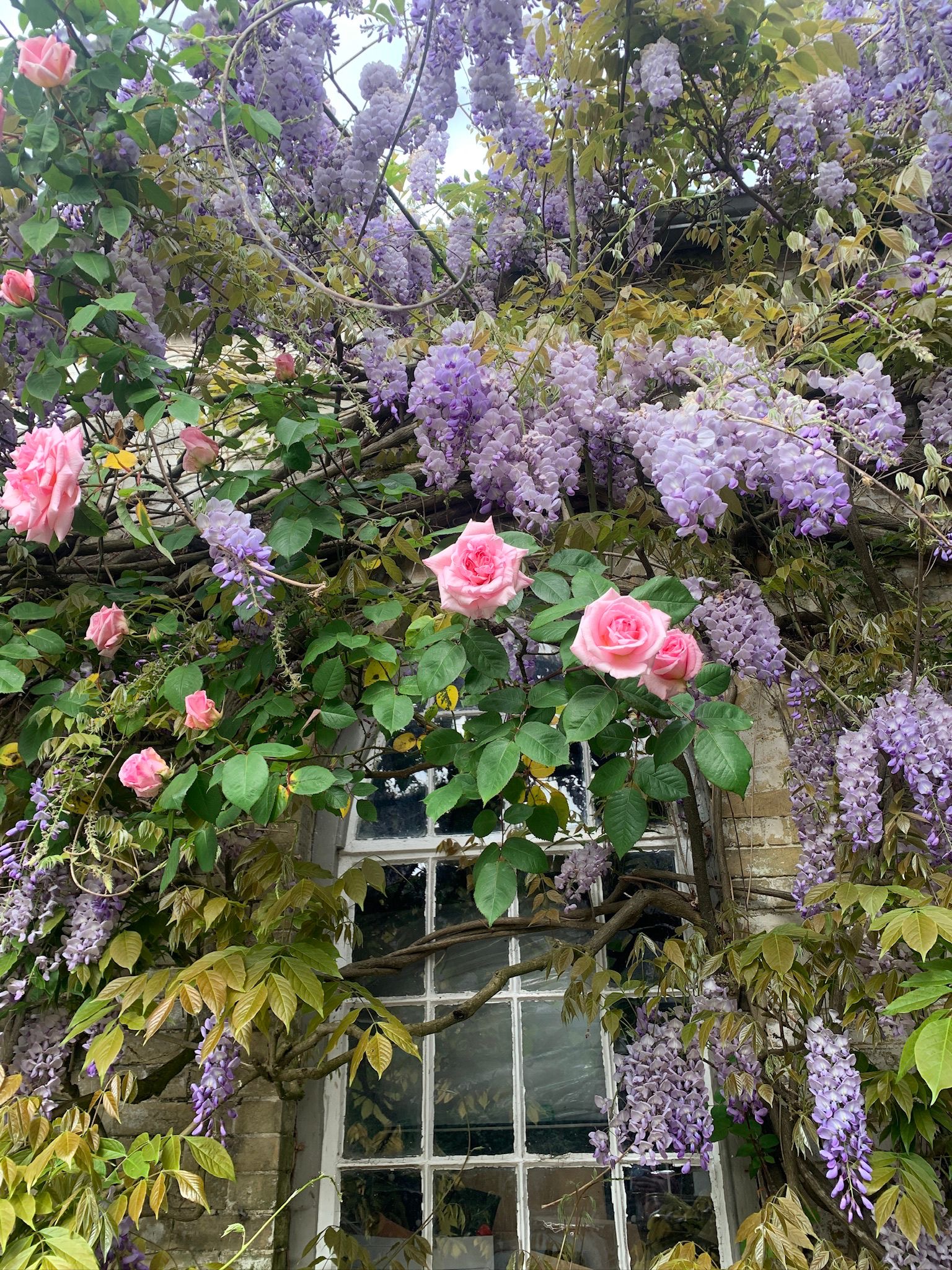
Despite the unpredictable weather, the gardens are looking lovely, and one plant in particular deserves special mention. We are lucky enough to have a huge, stunning wisteria growing in one of the courtyards, and during the month of May, the wisteria is in peak bloom, so it’s the perfect time to visit.
Wisteria is a vigorous plant, and it needs to be pruned twice a year to keep it in check and to encourage as many blooms as possible. It might sound daunting, but the pruning itself is straightforward and, during the warmer months, it is actually a lovely job (provided you can find a spot in the shade).

A Simple Guide to Wisteria Pruning
There are two key windows: a summer prune in July or August, and a winter prune in January or February. Ideally, you would do both, but nothing truly detrimental will happen if you miss one.
Summer pruning (July/August): After flowering, prune the long, wispy shoots back to five or six leaves. This removes the summer’s vegetative growth, improves airflow and sunlight around the plant, and gives new shoots the chance to develop into next year’s flower buds.
Winter pruning (January/February): Wisteria is deciduous and fully dormant in winter, so this is the time to cut back the shoots you pruned in summer even further, to just two or three buds. This keeps the plant in check and stops it from overgrowing your walls and gutters.
The 3 D’s of Pruning
As with all pruning, start with the three D’s: dead, diseased and damaged wood.
Remove those first, then assess what remains and prune accordingly. If your wisteria has been neglected and is overwhelming a building or feature, harder pruning may be needed, but try not to remove more than a third of the plant overall. Be aware that heavy pruning may mean fewer flowers the following season.
It is a satisfying job once you get into the rhythm of it and if you are ever in doubt, there are plenty of helpful videos online to guide you.
Warm welcome
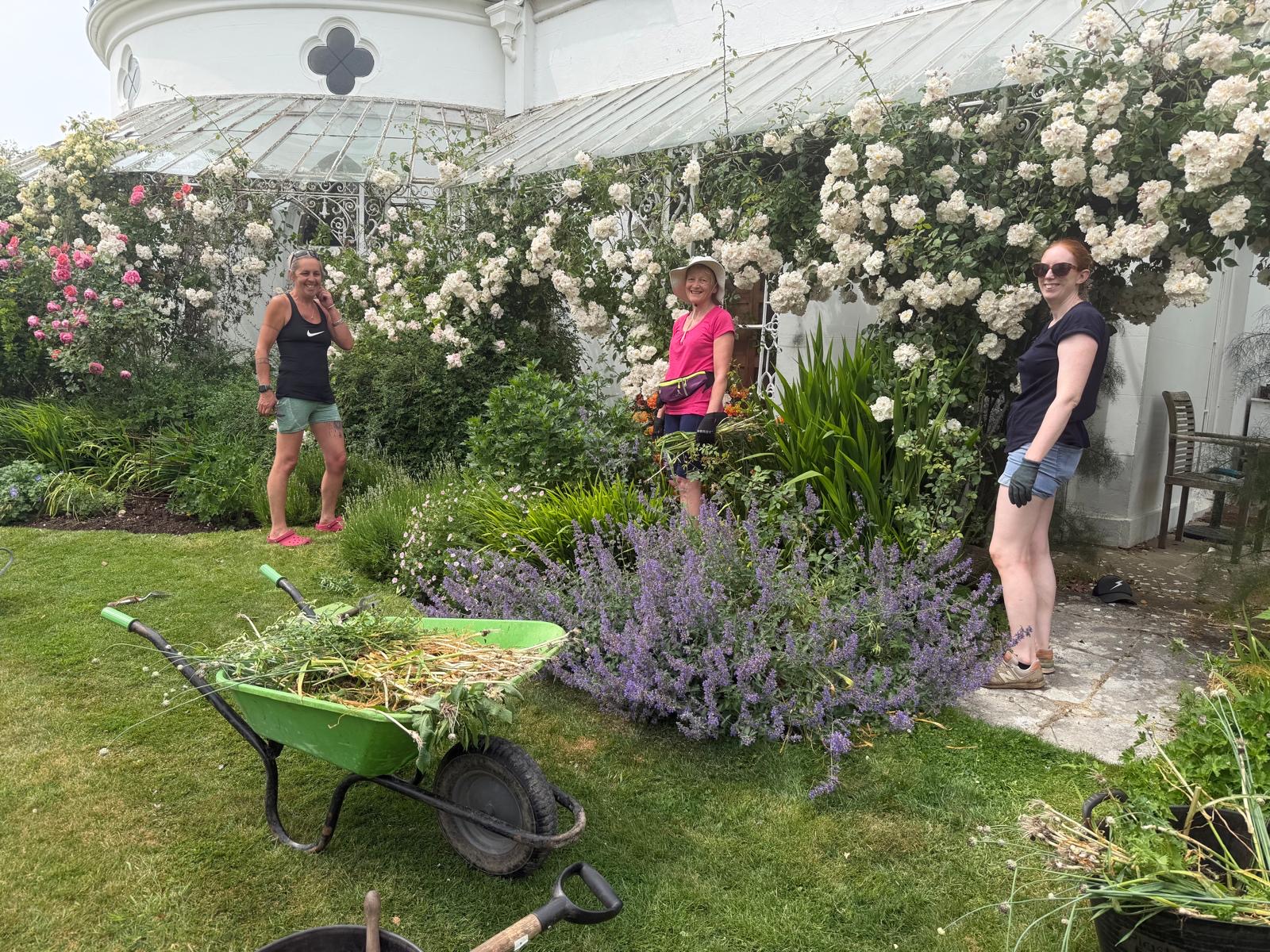
I’d like to take the opportunity to welcome two new seasonal gardeners to our team: Vikki and Eve. We are so glad to have them join our team and are forever grateful for their hard work during the busier months of the year.
If you see any of us around when you visit please do say hello or ask any questions – especially during this current UK heat wave, we’d welcome a moment to chat and cool down.

Thanks for reading,
Catherine
Undergardener