
The Walled Kitchen Garden
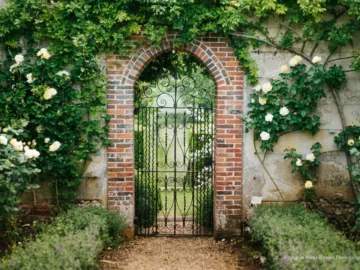
At Houghton Lodge we are lucky to have a walled kitchen garden, growing many varieties of fruit for us to enjoy today. The chalk cob wall is said to be the finest and most complete produce garden wall made of chalk cob still in use today for its original purpose. Built very high and roofed with loose tiles to put off intruders, it greatly assists the early ripening of fan-trained fruit trees. The base of flints acts as a damp course. The walls, made of a mixture of chalk and straw ‘puddled’ by oxen or horses, were built up in layers as each dried out. The chalk cob walls operate as a heat sink absorbing the heat of the sun by day, and releasing it slowly through the night, assisting in the early ripening of the many espalier trained fruit trees.



The Heritage Orchard
We are privileged to have a heritage orchard, but we have no idea for certain, only some tantalising clues, as to when it was planted.
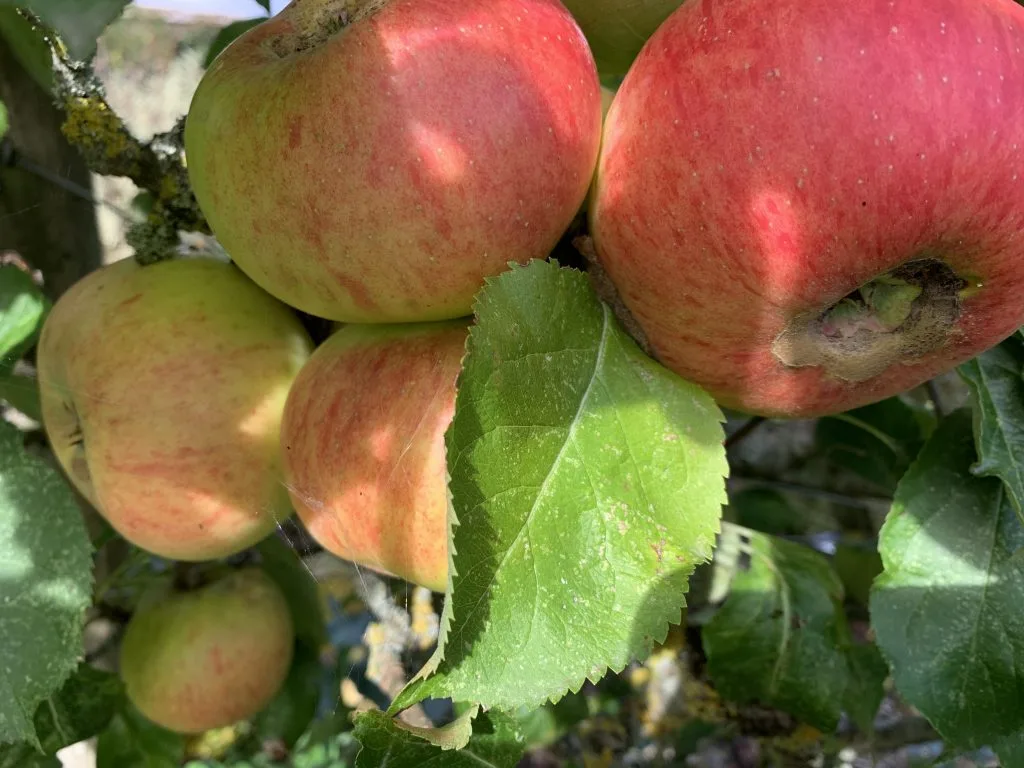
Heritage apples and pears are varieties not found in shops and supermarkets but many are packed with more vitamins and significantly more than popular modern varieties and taste spectacularly different! These historic varieties were grown a hundred or more years ago when the UK was full of orchards. Many orchards along with many varieties of apples and pears have since disappeared. This was due to a lack of manpower following the two world wars, new farming techniques and more profitable uses of the land. Nowadays, heritage apples are grown in private homes and gardens such as Houghton Lodge Gardens, National Trust properties and by volunteers for prosperity.
In the walled garden we have 45 apple trees, with 30 different varieties, planted mainly as espaliers along a north-south avenue through the centre of the 1 acre walled garden, their old and gnarly limbs now mainly propped up by rustic crutches.
Heritage Apples
There are some very old varieties of apple including Ribston Pippin 1707, Orleans Reinette 1776 and D’Arcy Spice 1785. We also have many varieties introduced in Victorian times. (The Victorians were enthusiastic horticulturists who continued to create new types, developing grafting techniques to maximise production and to spread the best across the country.) Examples of these in the garden include Peasgood Nonsuch 1853, Lane’s Prince Albert 1857 and Victoria 1899.
Apple trees can live for 300 years. The Orchard could have been planted in the eighteenth century and supplemented with new varieties as they became popular or were replaced through disease. Regrettably most old fruit trees tend to become hollow, so we cannot establish their age by counting rings. If it was planted much later than 1920 we think we would have more contemporary varieties in evidence. There are no apple trees with dates later than 1923. These trees were especially planned to provide apples ripening at different times – some even being carefully harvested in December. The best apples were selected from the trees (no windfalls) as bruised apples won’t keep! Apples used to be collected and stored on wooden slats for use into the spring. The loft above the Brew House was used as an apple store up until the 1990’s.

Heritage Pears
We have 10 varieties of heritage pear growing as espaliers on the east and west facing walls. Some of these are very old varieties including Catillac 1665 and Louise Bonne of Jersey 1780. Later introductions include Pitmaston Duchess 1841, Doyenne de Comice 1849 and Laxton’s Superb 1920.
Pear-Beurre Diel– In 2019 the Pear Tree in the walled garden was crowned a Champion Tree by The Tree Register, for being the widest espaliered pear tree in Britain (16.44m/53.93’). On 5th September 2019 it was also verified by GUINNESS WORLD RECORDS® titled holder for the longest espaliered plant in the world. The variety is Beurre Diel, propagated in the early 1800s in Belgium and named after a German Pomologist, Dr Augustus Diel. It particularly likes growing against a wall and produces a large crop of delicious juicy dessert pears. We are not sure how old it is, but we think that, to have gained its great width it must be at least 100 years old. It may be one of the trees in an advert for the sale of the house which states “Kitchen gardens stocked with excellent fruit trees’ (The Times 1801)
Sadly we shall never know the full answer to when the heritage orchard was planted. Maybe the orchard was set out in the eighteenth century and supplemented with new, better varieties as they became available, hence the flush of apple varieties in Victorian and Edwardian times. Or maybe the main collection was created during Ida and Lionel Wells occupancy of Houghton following their move here in 1910. (They died in the 1930s). This would date the setting out and planting of the current apple orchard, and probably the main planting of pear trees, at 100 years. We whimsically like to think there may be a few surviving older varieties dating from the eighteenth century as described in the advert of 1801.
Renovation of the Heritage Orchard
We are also introducing some ‘step over’ apple trees to fill gaps in the apple walk where we have lost a tree. We are choosing old varieties which were available pre 1930, a spectacular time for fruit production, and which will fit with our collection.
Apple Juice
We are often asked what do we do with all our fruit: We have it pressed and sell the juice in the Tea Room. We have also made a ‘Churchwarden’s Tipple’ which is a cross between an apple brandy and a sweet wine. Visitors to the garden are encouraged to scrump. Our jam cupboard is full of apple sauce, blackberry and raspberry jam, and fortunately with the advent of grandchildren, Granny sees an opportunity for apple cakes and nursery puddings to be put back on the menu!
The Peony Walk
Underplanted with muscari the purple young shoots of the peonies and the blue of the muscari are one of the most exciting sights to behold in March and remind us that the garden is waking up for a new season. We have recently learned that we have a very special collection of Kelways peonies growing in the walled garden. The current peony walk was planted in the early 1980s – replacing an iris walk-but it is believed the soil became “iris sick” and they needed to be removed. The peonies came from Kelways: Since the 1980s Kelways have faced liquidation a few times and some of their special Kelway varieties have been lost. A few of these ‘lost’ peonies are enjoying life at Houghton Lodge!


The Rose Arch
We have a bright pink rambler to scramble over the rose arch- ‘American Pillar’ which flowers until the end of July and alternates along the arches with a soft pink repeat flowering noisette rose ‘Narrow Water’ which flowers until the first frosts. A rich purple viticella clematis ‘Royal Velour’ weaves its way through both roses to extend the flowering season into the autumn.
The Herb Garden
Divided into a quadrant we have a pot pourri & perfumery bed, natural dye, herbal tea and medicinal bed. Many herbs can be used for all sorts of different purposes as we learned while trying to introduce ‘fun facts’ to the labels.The double buff/pink flowers of the rose Ghislaine du Feligonde cover the rose arches here. The Gallica, Damask and China roses were especially selected and planted in the herb beds as they would have been found in the apothecary gardens of ancient times.


The Hosta Bed
We are very fond of hostas-and in 2017 we planted a hosta bed on the east facing wall of the walled garden. We have many different varieties ranging from enormous broad leaved variegated hostas to tiny curly leaved hostas with wonderful names like “Abiqua Drinking Gourd” and “Blue Mouse Ears”, and they look just as they sound.
The Iris Bed
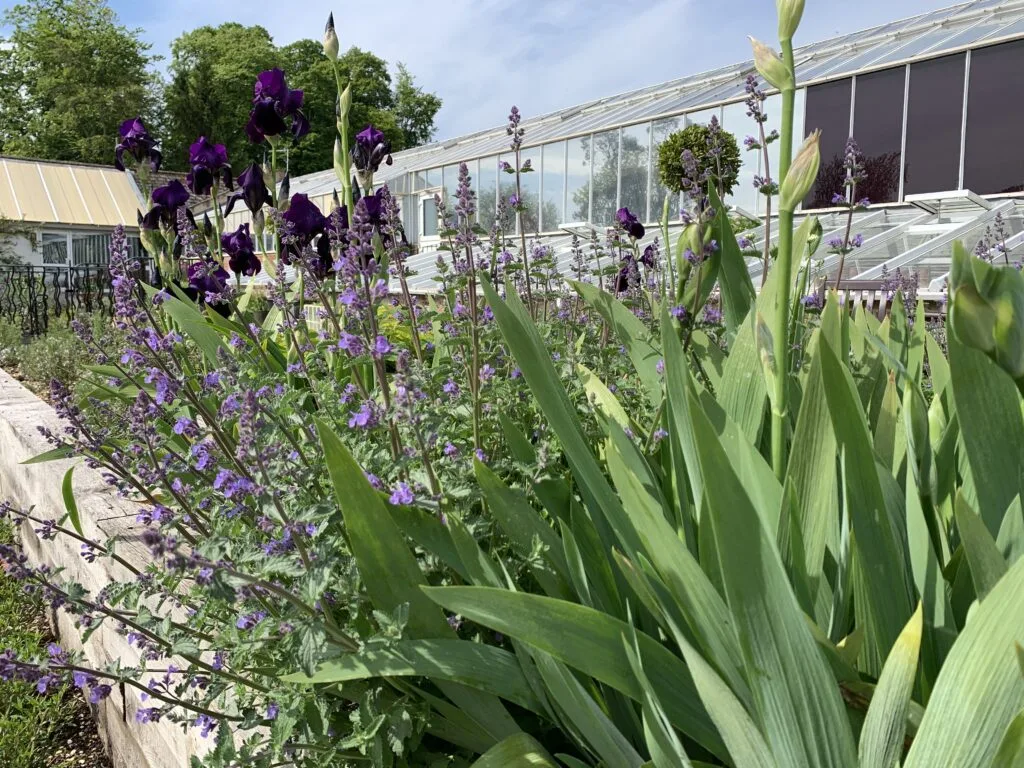
We always had some beautiful iris scattered throughout the garden but had no exclusive iris bed. In the winter of 2020, we decided to change this and planted two iris beds at the south facing end of the walled garden. These irises are bearded varieties ranging through miniature dwarf to dwarf, to standard to tall. These are flowering varieties in all manner of stunning colour combinations to blend and contrast with the majestic cob wall behind.

The Sweet Peas & The Orchid House
We are lucky to have some horticulturists living locally who love to grow and display their specialist flowers in the garden. Jim Macdonald grows a stunning display of Spencer and heritage grandiflora sweet peas with their intoxicating scent delighting everyone from June to the end of July, and there is an enchanting display of orchids in the orchid house which form an inspiring collection created and cared for by our orchid expert Andy Phillips.
The Cut Flower and Vegetable Bed
In 2024 we have extended the cut flower beds in the walled garden to provide a vibrant and beautiful display of colour from July onwards using gladioli’s, scabious, cosmos, saliva, zinnias and antirrhinums. The veg beds provide us with delicious vegetables and are designed to be like a garden allotment.


The Glass House Tearoom & Conservatory
The Conservatory is available for small, intimate parties, workshops and wedding ceremonies.
Explore Our Gardens