
A Garden With Roses
The Roses
Written by a friend who loves the garden and knows the roses!
Gardens both reflect their times and serve as repositories for the history of England’s love of gardening and the gardens at Houghton are no exception. Gardens also reflect their owners: in some generations the garden languishes, in others it flourishes. At some times its owners delight in exhibiting their designs to the world, and the garden bursts with colour and exuberance. At others it retreats into semi-wilderness with perhaps a patch left for the production of vegetables for the house.
We are currently in a season of exuberance, with new designs, new plantings and new areas of the grounds opened for our visitors to enjoy.
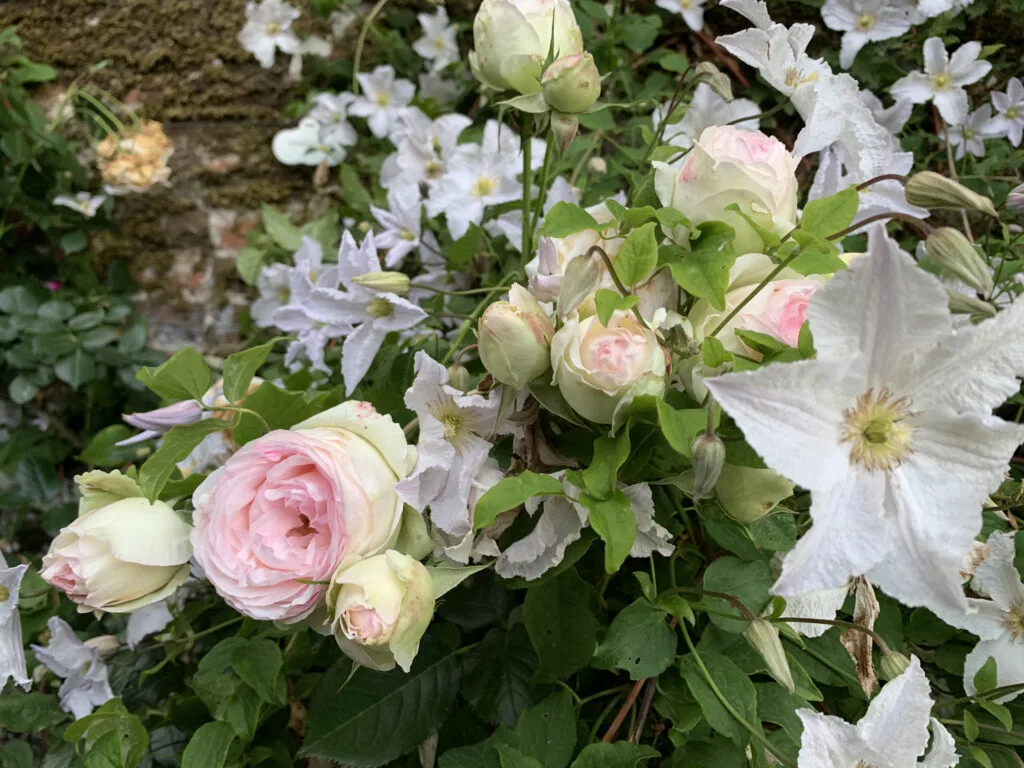
Here are the stories of some of the roses in the garden. Some old friends who had lost their identities have been named (or – at worst – an educated guess been made!) and rejuvenated; some known to have been planted in the past have been restored to their place; and some new plantings have been made to reflect the roses available or fashionable at periods of the gardens history. There is no ‘formal’ Rose Garden here, instead we have a Garden with Roses.
At the time Houghton was being built, King George III had sent an expedition to the Emperor of China under Lord Macartney. Macartney was charged by the King to impress the Chinese Emperor with examples of the finest works of England’s craftsmen and manufacturers in the hope of obtaining a preferential trade deal, but was rebuffed with the Emperors reply:’ Our Celestial Empire possesses all things in prolific abundance and lacks no product within its borders. There is therefore no need to import the manufactures of outside barbarians in exchange for our own produce.’


The Old Roses
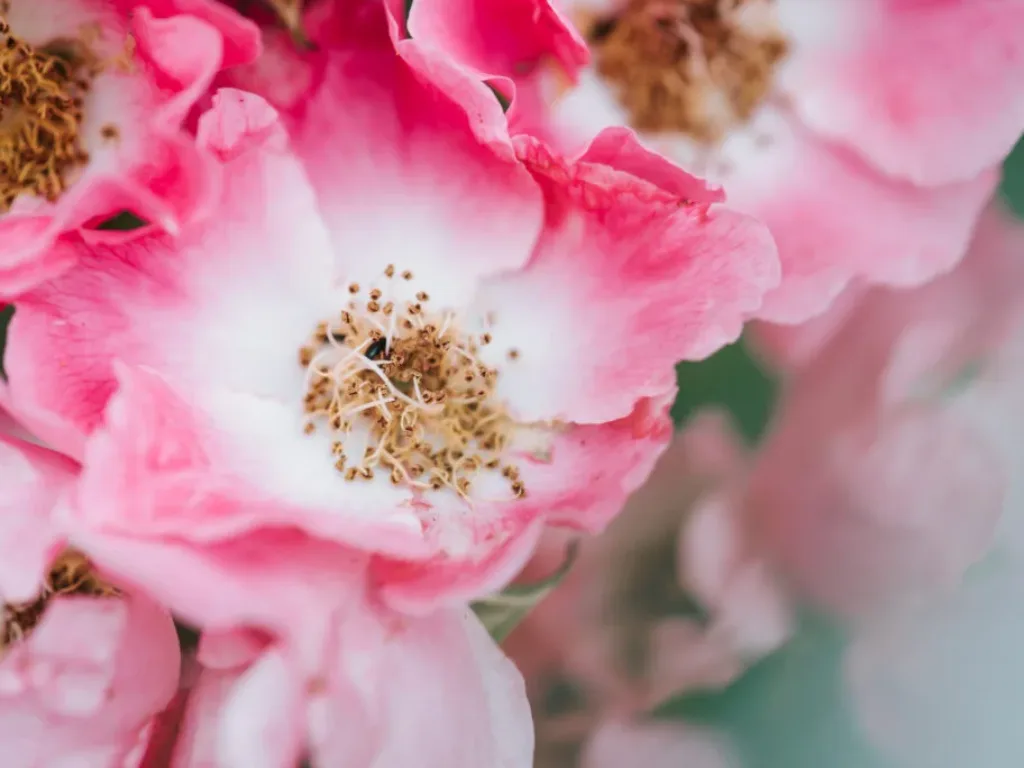
One largely overlooked success of the otherwise abortive expedition was the inclusion of a botanist at the request of Joseph Banks, President of the Royal Society and founder of the Royal Botanical Gardens at Kew, who had himself been a botanist aboard Captain Cook’s ship ‘Endeavour’. Among the specimens collected on the journey were four roses, three of which seem to be lost. The survivor was a simple pink rose we call ‘Old Blush’ – although it has a dozen or so other names around the world.
‘Old Blush’, and the Autumn Damask ‘Quatre Saisons’, became the progenitors of a very large number of the garden roses – some 35,000 varieties – that have been loved to the present day. The chance joining of the two roses on the remote Indian Ocean island of Réunion (Ile de Bourbon) produced a new race of roses that had the large blooms and heady fragrance of the Damasks with the new colours and ability to flower repeatedly of the China (Bourbons ‘Mme. Isaac Pereire’, ‘Sir Joseph Paxton’) , while another chance crossing of Old Blush with the species Musk Rose in the Carolina colony produced a family of repeat-flowering climbing roses (‘Blush Noisette’). Taken up by European horticulturists, more deliberate crosses were made and new varieties began to flow into gardens. Made fashionable by the Royal houses of Europe and spreading down through society, these roses became the mainstay of great gardens and were carried by colonial administrators and their wives to the New World and even back to the lands of their ancestors in the Middle and Far East.
The Damasks themselves had come to Europe from Persia and Turkey via the Holy Land, brought back by Crusaders who had learned the value of their medicinal, cosmetic and decorative properties. These blush-coloured roses (the word ‘pink’ is of relatively modern use) were soon commonly grown in the herb gardens of monasteries, nunneries and convents and in the apothecary gardens of most towns and villages, where they joined the red flowers of the Gallicas and the white of the Albas. Even today, the fragrances and soft colours of the Herb Garden seem to be the natural setting for these ancient roses. They were later joined by the Centifolia roses, the ‘Cabbage Roses’ best known from the flower paintings of the Dutch masters (Rosa Centifolia’); and a natural variant of the Damasks known as the Moss Roses (‘William Lobb’), for the highly-scented mossy covering of their buds and stems.
‘Alba semiplena’. At some point, the British native ‘Rosa Canina’ crossed with a Damask and produced a race of pure white roses known as the Albas. This tall and robust rose is best known today as the White Rose of York.
‘Gallica officinalis’. Before the arrival of the Damasks, the source of medicinal rose oils in Europe, and especially France, was ‘The Apothecary’s Rose’. This is the red rose chosen as the emblem of the House of Lancaster. Around the mid 12th century, a striped variant appeared : ‘Rosa Gallica versicolour’ ,or ‘Rosa Mundi’ – the Rose of the World’ – said to be named for Fair Rosamund (Rosamund Clifford), the mistress of King Henry II. Another Gallica of interest is ‘Conditorum’ , the Hungarian Rose, an ancient variety that was brought into Hungary during that country’s occupation by the Ottoman Turks under Sultan Suleiman the Magnificient in the 16th century.
‘Omar Kayyam’. A Damask with an interesting history. This rose was propagated from a rose planted by the Suffolk grave of Edward Fitzgerald, the translator of ‘The Rubaiyat of Omar Kayyam ‘ , by members of the Omar Kayyam Club in 1893. That rose itself was grown at Kew from seed brought from a plant growing at Omar Kayyam’s tomb at Nishapur. ‘My tomb shall be in a spot where the north wind may scatter roses over it.’ – Omar Kayyam: poet, scientist, mathematician (1048-1131).
That’s the (much simplified) history lesson! Please enjoy all the roses around the garden: the great climbing roses on the walls inside and out of the Walled Garden, the stable yard, the Peacock Garden and the veranda around the house; the rambling roses tumbling from the trees and the wild landscape roses around the grounds as well as the newly planted collection of species roses in the Oriental Garden. Many of these roses will grow to be too big for the ordinary garden, but are at home in the relaxed and informal gardens of Houghton Lodge.


Explore Our Gardens